



Potassium Channel
KcsA
Potassium channels are the most widely distributed type of ion channel and are found in virtually all living organisms. They form potassium-selective pores that span cell membranes. Potassium channels are found in most cell types and control a wide variety of cell functions. Potassium channels function to conduct potassium ions down their electrochemical gradient, doing so both rapidly and selectively. Biologically, these channels act to set or reset the resting potential in many cells. In excitable cells, such asneurons, the delayed counterflow of potassium ions shapes the action potential. By contributing to the regulation of the action potential duration in cardiac muscle, malfunction of potassium channels may cause life-threatening arrhythmias. Potassium channels may also be involved in maintaining vascular tone.
All Product Categories
-
Potassium Channel Inhibitors
(662)
View all products
-
Potassium Channel Agonists
(31)
View all products
-
Potassium Channel Antagonists
(38)
View all products
-
Potassium Channel Activators
(237)
View all products
-
Potassium Channel Modulators
(39)
View all products
-
Potassium Channel Chemical
(1)
View all products
-
Potassium Channel Controls
(11)
View all products
-
Potassium Channel Produits associés (1109)
Produits associés (1109)

-
Anticorps (6)
-
Related Compound Screening Libraries (1)
-
Tetraethylammonium chloride
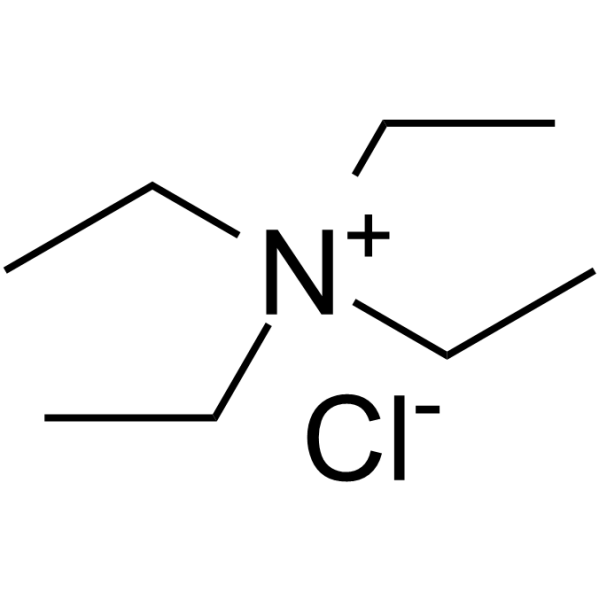 0 ImagesTetraethylammonium chloride is a non-selective potassium channel blocker. Tetraethylammonium chloride is a good substrate for organic cation transporter (OCTN1). Tetraethylammonium chloride antitumor properties.
-
PAP-1
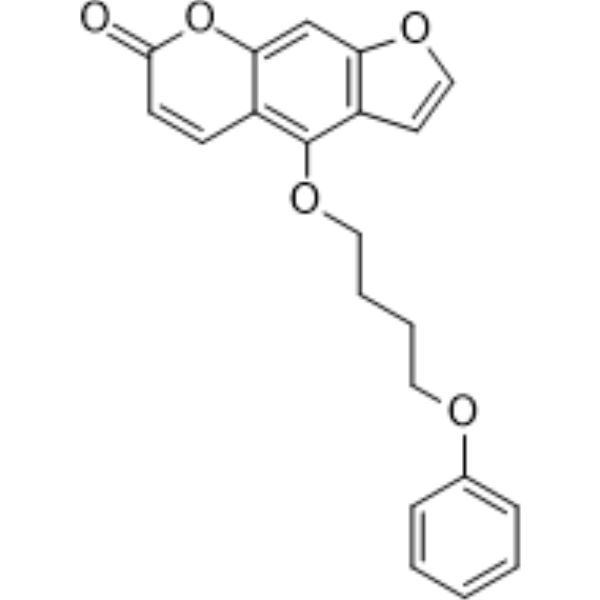 0 ImagesSynonyms: 5-(4-Phenoxybutoxy)psoralenPAP-1 (5-(4-Phenoxybutoxy)psoralen) is a potent, selective, and orally active Kv1.3 blocker (EC50=2 nM). PAP-1 blocks Kv1.3 in a use-dependent manner and acts by preferentially binding to the C-type inactivated state of the channel. PAP-1 exhibits 23-fold selectivity over Kv1.5 (EC50=45 nM), and further displays 33- to 125-fold selectivity over all other Kv1-family channels. PAP-1 does not exhibit cytotoxic or phototoxic effects.
-
Flufenamic acid
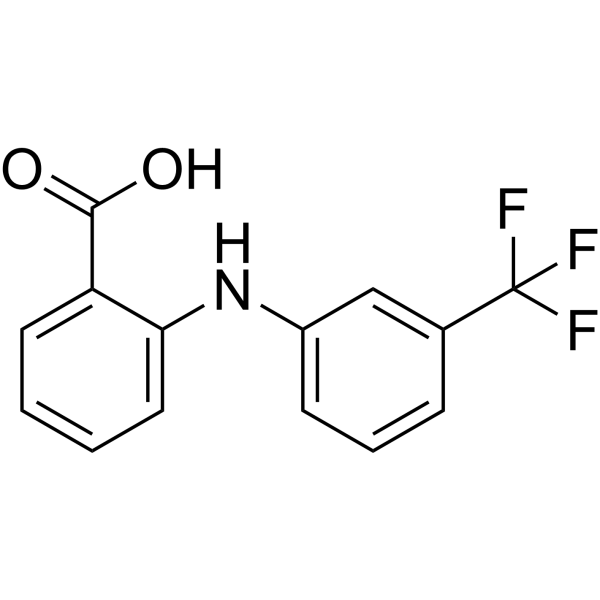 0 ImagesFlufenamic acid is a non-steroidal anti-inflammatory agent, inhibits cyclooxygenase (COX), activates AMPK, and also modulates ion channels, blocking chloride channels and L-type Ca2+ channels, modulating non-selective cation channels (NSC), activating K+ channels. Flufenamic acid binds to the central pocket of TEAD2 YBD and inhibits both TEAD function and TEAD-YAP-dependent processes, such as cell migration and proliferation.
-
2-PPA
 0 Images2-PPA is a lysosomal potassium and proton channel TMEM175 pore blocker. 2-PPA binds at a TMEM175 pore site to occlude potassium and proton ion permeation pathways. 2-PPA increases lysosomal macromolecule catabolism, accelerates macropinocytosis. 2-PPA binds to hepatic protein in covalent. 2-PPA can be used for the research of Parkinson's disease.
-
Bupivacaine
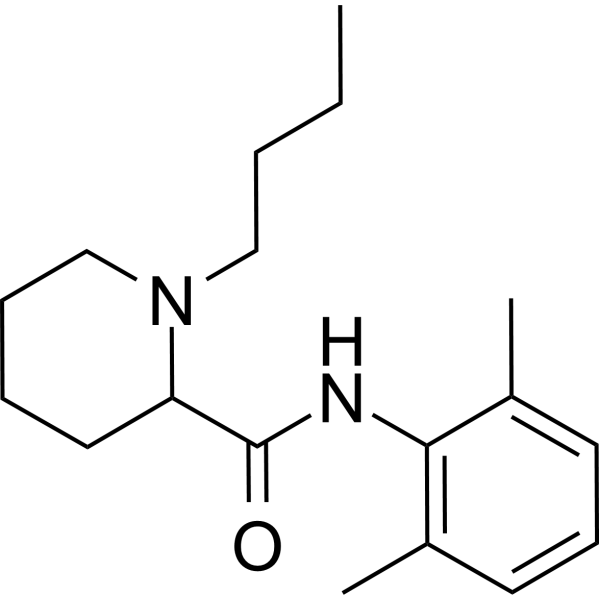 0 ImagesBupivacaine is a NMDA receptor inhibitor. Bupivacaine can block sodium, L-calcium, and potassium channels.Bupivacaine potently blocks SCN5A channels with the IC50 of 69.5 μM. Bupivacaine can be used for the research of chronic pain.
-
Hydrochlorothiazide
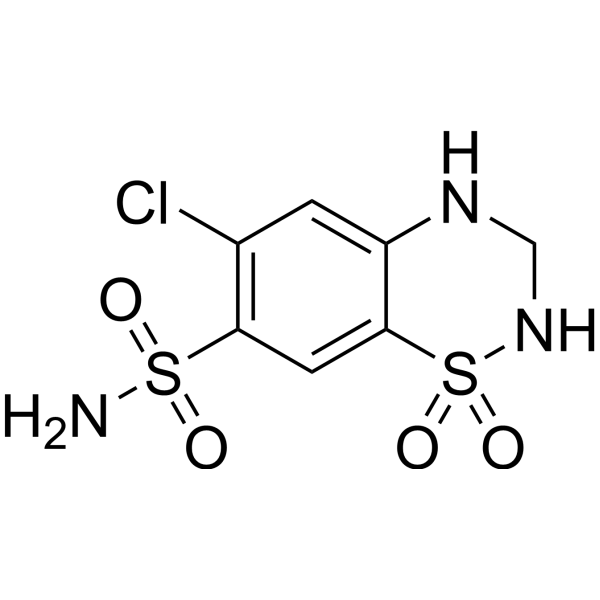 0 ImagesHydrochlorothiazide (HCTZ), an orally active diuretic agent of the thiazide class, inhibits transforming TGF-β/Smad signaling pathway. Hydrochlorothiazide has direct vascular relaxant effects via opening of the calcium-activated potassium (KCA) channel. Hydrochlorothiazide improves cardiac function, reduces fibrosis and has antihypertensive effect.
-
Topiramate
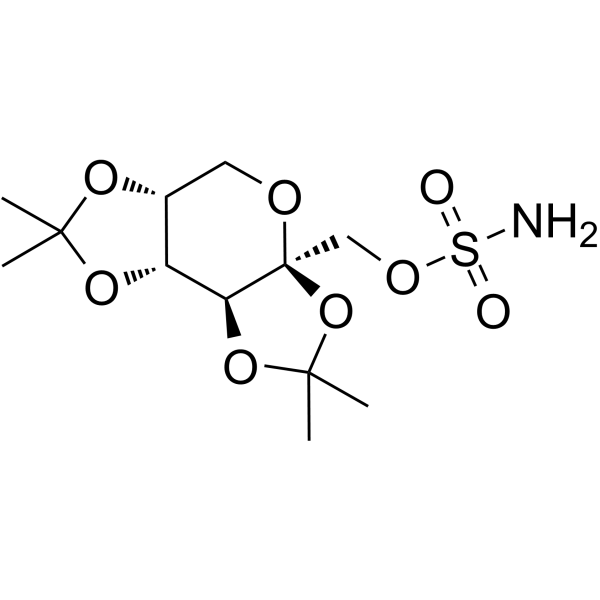 0 ImagesSynonyms: McN 4853; RWJ 17021Topiramate (McN 4853) is a broad-spectrum antiepileptic agent. Topiramate is a GluR5 receptor antagonist. Topiramate produces its antiepileptic effects through enhancement of GABAergic activity, inhibition of kainate/AMPA receptors, inhibition of voltage-sensitive sodium and calcium channels, increases in potassium conductance, and inhibition of carbonic anhydrase.
-
Cisapride
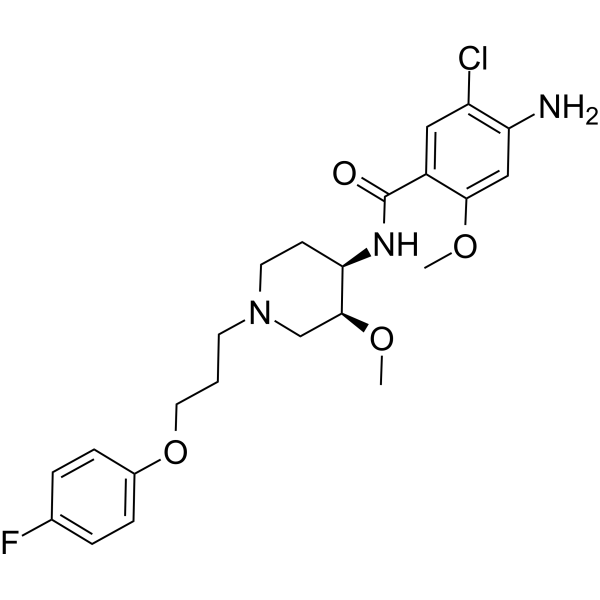 0 ImagesSynonyms: R 51619; (±)-CisapridCisapride (R 51619) is an orally active 5-HT4 receptor agonist with an EC50 value of 140 nM. Cisapride is a hERG blocker with an IC50 value of 9.4 nM. Cisapride is a gastroprokinetic agent that stimulates gastrointestinal motor activity.
-
Amitriptyline
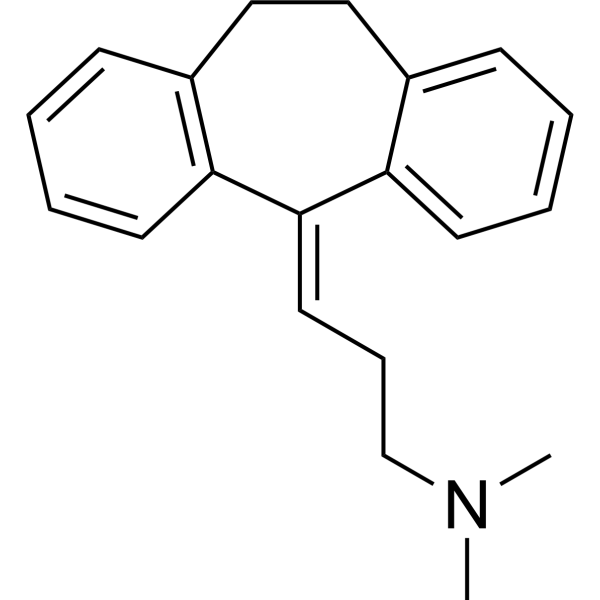 0 ImagesAmitriptyline is an orally active tricyclic antidepressant (TCA). Amitriptyline mainly exerts its antidepressant effect by blocking SERT (Ki = 3.45 nM) and NET (Ki = 13.3 nM), thereby increasing the concentrations of 5-hydroxytryptamine (5-HT) and norepinephrine (NE) in the synaptic cleft. Amitriptyline is also an agonist at α2A and TrkA/TrkB receptors, thereby exerting analgesic and neurotrophic activities (inhibiting cell apoptosis). Amitriptyline can reduce inflammation, angiogenesis and fibrosis. Amitriptyline binds to DAT (with Ki = 2.58 μM). Amitriptyline has high affinity for a series of receptors and can antagonize muscarinic cholinergic receptors (M1/M2/M3/M4/M5 receptors) (Ki = 11-24 nM), H1 receptors (Ki = 0.5-1.1 nM), adrenergic α1 receptors (Ki = 4.4 nM), etc., resulting in a series of side effects. Amitriptyline can block sodium channels and hERG potassium channel (IC50 = 4.78 μM) and it has cardiotoxicity.
-
Atpenin A5
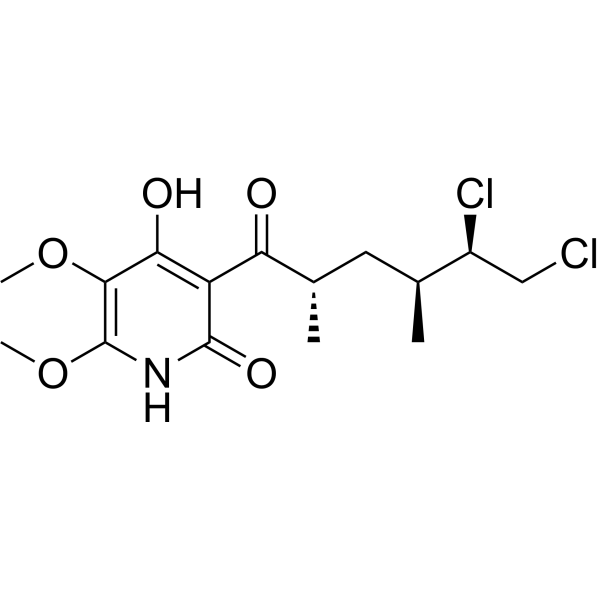 0 ImagesAtpenin A5 is a potent and highly specific complex II inhibitor (IC50 ~10 nM), and is an effective mKATP channel agonist and cardioprotective agent.
-
Potassium chloride, for cell culture
 0 ImagesPotassium chloride, for cell culture is potassium chloride that can be used for cell culture. Potassium chloride, for cell culture increases extracellular potassium ion concentration to induce cellular depolarization, thereby activating voltage-gated calcium channels and regulating intracellular calcium signaling. Potassium chloride, for cell culture upregulates Brn-5. Potassium chloride, for cell culture inhibits the proliferation of neurons and some plant cells.
-
L-Palmitoylcarnitine
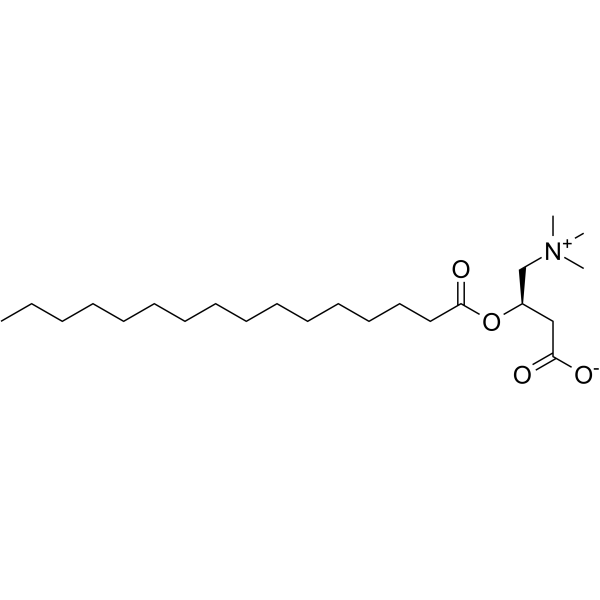 0 ImagesL-Palmitoylcarnitine, a long-chain acylcarnitine and a fatty acid metabolite, accumulates in the sarcolemma and deranges the membrane lipid environment during ischaemia. L-Palmitoylcarnitine inhibits KATP channel activity, without affecting the single channel conductance, through interaction with Kir6.2.
-
Amitriptyline hydrochloride
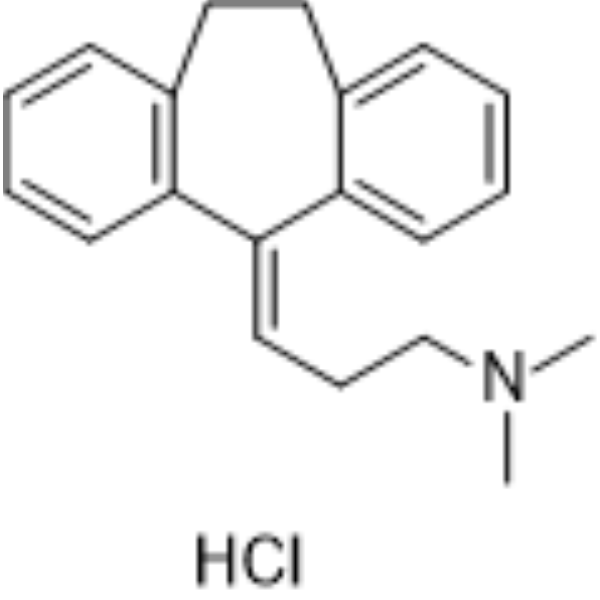 0 ImagesAmitriptyline hydrochloride is an orally active tricyclic antidepressant (TCA). Amitriptyline hydrochloride mainly exerts its antidepressant effect by blocking SERT (Ki = 3.45 nM) and NET (Ki = 13.3 nM), thereby increasing the concentrations of 5-hydroxytryptamine (5-HT) and norepinephrine (NE) in the synaptic cleft. Amitriptyline hydrochloride is also an agonist at α2A and TrkA/TrkB receptors, thereby exerting analgesic and neurotrophic activities (inhibiting cell apoptosis). Amitriptyline hydrochloride can reduce inflammation, angiogenesis and fibrosis. Amitriptyline hydrochloride binds to DAT (with Ki = 2.58 μM). Amitriptyline hydrochloride has high affinity for a series of receptors and can antagonize muscarinic cholinergic receptors (M1/M2/M3/M4/M5 receptors) (Ki = 11-24 nM), H1 receptors (Ki = 0.5-1.1 nM), adrenergic α1 receptors (Ki = 4.4 nM), etc., resulting in a series of side effects. Amitriptyline hydrochloride can block sodium channels and hERG potassium channel (IC50 = 4.78 μM) and it has cardiotoxicity.
-
Mefloquine hydrochloride
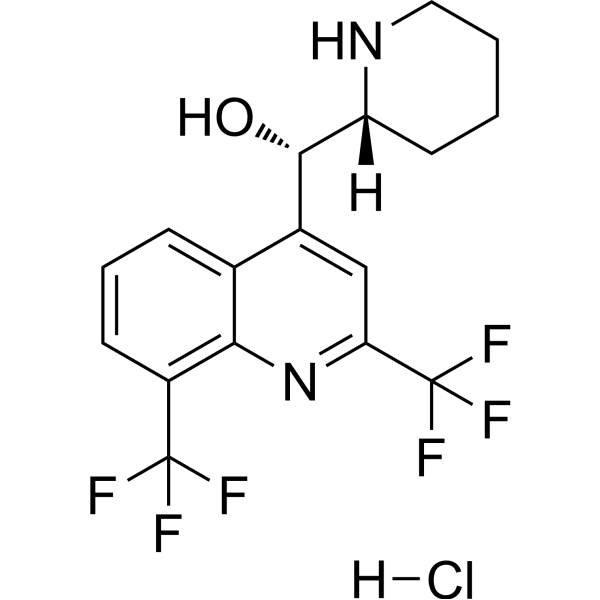 0 ImagesSynonyms: Mefloquin hydrochlorideMefloquine hydrochloride (Mefloquin hydrochloride), a quinoline antimalarial agent, is an anti-SARS-CoV-2 entry inhibitor. Mefloquine hydrochloride is also a K+ channel (KvQT1/minK) antagonist with an IC50 of ~1 μM. Mefloquine hydrochloride can be used for malaria, systemic lupus erythematosus and cancer research.
-
Rosuvastatin Sodium
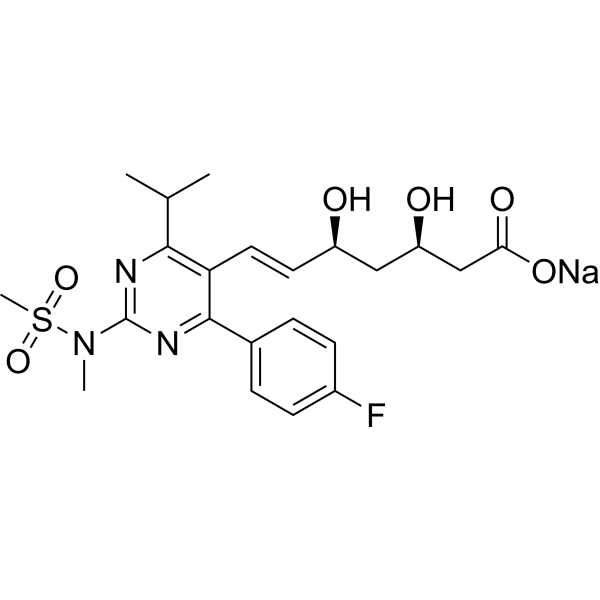 0 ImagesSynonyms: ZD 4522 Sodium; X-Plended Sodium; Crestor SodiumRosuvastatin Sodium is a competitive HMG-CoA reductase (HMGCR) inhibitor, with an IC50 of 11 nM. Rosuvastatin Sodium potently blocks hERG current with an IC50 of 195 nM. Rosuvastatin Sodium reduces the expression of the mature hERG and the interaction of heat shock protein 70 (Hsp70) with the hERG protein. Rosuvastatin Sodium effectively lowers low-density lipoprotein (LDL) cholesterol, triglycerides, and C-reactive protein levels.
-
Pinacidil
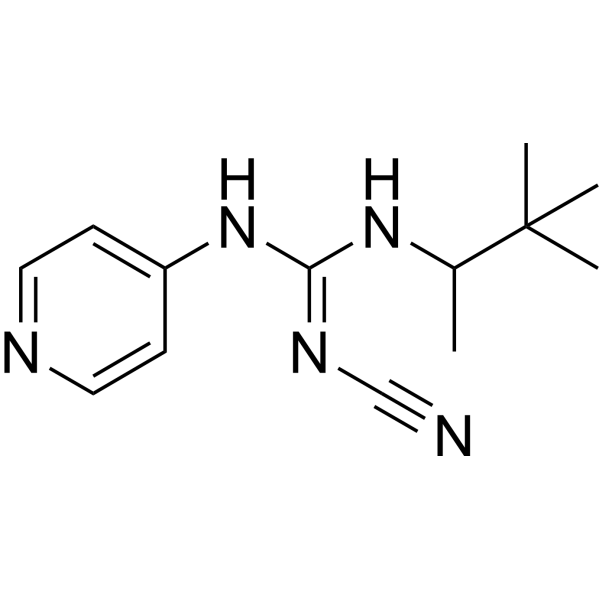 0 ImagesSynonyms: P-1134Pinacidil (P-1134) is a potent activator of ATP-sensitive potassium channel. Pinacidil is an antihypertensive agent hyperpolarizes vascular smooth muscle by opening K+ channels. Pinacidil enhances K+-efflux in smooth muscle. Pinacidil has vasorelaxant properties. Pinacidil is able to inhibit spontaneous tone and of reducing agonist induced contractions. Pinacidil can be studied in research area such as cardiovascular diseases.
-
XE991 dihydrochloride
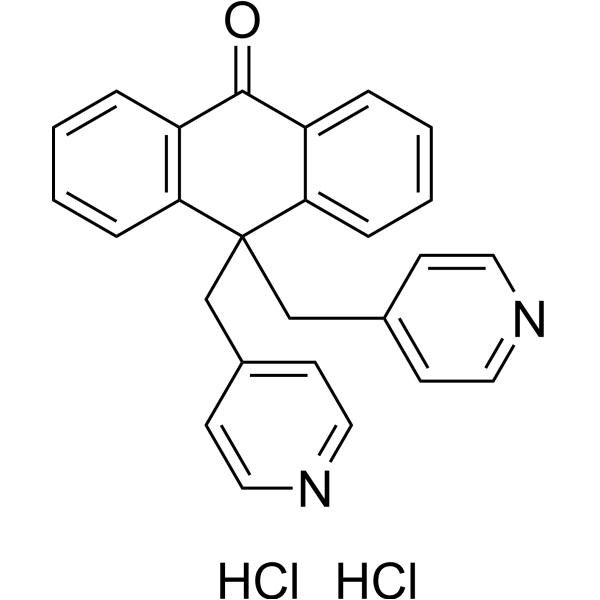 0 ImagesCat. No.: HY-108577CAS No.: 122955-13-9XE991 dihydrochloride, a Kv7 (KCNQ) channels blocker, potently inhibits Kv7.1 (KCNQ1), Kv7.2 (KCNQ2), Kv7.2 + Kv7.3 (KCNQ3) channel, and M-current with IC50s of 0.75 μM, 0.71 μM, 0.6 μM, and 0.98 μM, respectively.




